
A 4-Day Kanchanaburi Itinerary for Photographers
InWanderment contains affiliate links. If you make a purchase or a booking using these links, we may receive a commission at no extra cost to you. This helps with the cost of running InWanderment. See our Privacy Policy page for more information. We appreciate your support!
If you’re planning a 4-day Kanchanaburi itinerary and you’re into photography or just want a more laid-back way to explore that doesn’t have you rushing around, this guide is for you.
Kanchanaburi is only a couple of hours from Bangkok, but it feels completely different, slower, calmer and with way fewer crowds.
It’s best known for the Bridge over the River Kwai and its wartime history.
But there’s so much more to it than that.
You’ve got jungle waterfalls, hilltop temples, local markets and the chance to connect with ethical elephant experiences too.
We’ve included a mix of landscape photography spots, cultural highlights and historic spots, not just the typical tourist checklist. You’ll also find tips on how to get around, where to stay and how to make it all work without feeling rushed.
Most itineraries try to squeeze everything into a day or two, but we travel differently.
We prefer to take our time, especially when we’ve got our cameras with us.
This guide gives you space to do the same.
Initially, we weren’t sure what we would think of Kanchanaburi or if it had enough to offer photographers, but it turned out to be one of our favourite places in Thailand.
Peaceful, photogenic and surprisingly full of hidden gems.
It’s 100% worth the trip.

How to Get to Kanchanaburi
The easiest way to get to Kanchanaburi from Bangkok is either by train or minivan.
Both are budget-friendly and fairly straightforward, but we prefer the train to Kanchanaburi from Bangkok.
- By Train: This is the most scenic option and feels like a bit of an adventure! Trains leave from Bangkok’s Thonburi Station twice a day and take around 2.5 to 3 hours. Tickets are cheap and you can buy them at the station before departure. To find out exactly what to expect and how to buy your tickets, check out our Kanchanaburi to Bangkok by train guide.
- By Minivan: If you want to get there a bit faster, minivans run regularly from Bangkok’s Southern Bus Terminal. The journey takes around 2 hours, depending on traffic and they’ll drop you off right in town.
- By Private Driver or Taxi: Best if you’re travelling with a group or have heavy bags or camera gear. It’s the most expensive option but also the most comfortable.
💡 Planning a trip but not sure where to start? 🤔
👉 Grab your FREE Guide to 50+ of the BEST travel apps – Apps to help you navigate, find volunteer roles, house swapping, transport, planning, and more!
✈️ As full-time travel photographers, we’ve personally tested and used every app in this guide during our 18 months on the road, and they honestly made travel smoother, smarter, and way more fun.
📩Pop in your email and we’ll send it straight over – hope it helps make your next adventure a little easier!
How to Get Around Kanchanaburi
Kanchanaburi is quite spread out, especially if you want to visit waterfalls, temples, or places further out of town like Erawan National Park.
These are the easiest ways to get around:👇
🚗 Hire Car (Best option for Photographers)
This was our go-to across northern Thailand and in Kanchanaburi, too. It gave us loads of flexibility for travel photography, especially for sunrise and sunset shoots or harder-to-reach spots. Driving in Thailand is surprisingly easy and rental prices are reasonable, even more so if you’re travelling as a couple or group. And we always felt very safe driving in Thailand.
We always recommend using Booking.com to book your hire car as they compare prices and the process is simple. We hired a car for over a month via Booking and had no issues at all.
However, since Kanchanaburi is a little off the main tourist track, you would need to hire in Bangkok and drive out to the area if booking through one of the more well-known car rental companies.
That said, we actually hired from this company for a few days and had no issues at all.
🚕 Grab
Grab works well in and around the town centre. It’s a convenient way to get short rides to places like the night market or the train station.
🚌 Public bus
Great if you’re heading to Erawan Waterfalls or nearby villages and don’t mind arriving at a later time. Buses are affordable, but they are infrequent, so it’s worth checking the return times before you go. They are not a great option if you are travelling for photography, as they often won’t get you to the entrance for opening time.
‼️ NOTE: We know a lot of people rent scooters or motorbikes in Thailand and every single blog recommends this as the best way to get around. Sorry to be the mood hoover of the travel blog world, but it’s worth knowing that legally you do need a motorbike licence from your home country. It’s not always enforced, but if you’re in an accident, your travel insurance may not cover you. It’s a personal choice, but we don’t recommend taking the risk.
💡TIP: We use SafetyWing Nomad Insurance and have no hesitation in recommending them for your travels. We have had personal experience of filing a claim and dealing with them as an organisation. We found the claims process straightforward, and the payout was very quick!

4-Day Kanchanaburi Itinerary
This 4-day photography trip through Kanchanaburi is designed to balance must-see spots with extra time to slow down and see what crops up along the way.
Which is ideal if you want a more relaxed experience without feeling rushed.
Prefer a faster pace? You’ll find even more ideas in the More Things to Do in Kanchanaburi section below.
Short on time? Here are the highlights: 👇
| Day | AM | PM |
| Day 1 | Bridge Over the River Kwai | Kanchanaburi Night Market |
| Day 2 | Wat Tham Sua | Wat Baan Tham |
| Day 3 | Somboon Legacy Foundation | Somboon Legacy Foundation |
| Day 4 | Erawan waterfalls | Tham Krasae Death Railway Bridge |
Day One: Bridge Over the River Kwai, Death Railway and Kanchanaburi Night Market
Bridge over the River Kwai
Start your Kanchanaburi itinerary with one of the most well-known and sobering parts of the area’s history.
The famous Bridge over the River Kwai.
During World War II, the Japanese army forced Allied prisoners of war and local workers to build this railway through western Thailand. The conditions were horrific and thousands died in the process.
The bridge became world-famous after the film The Bridge on the River Kwai, but the true story is far more intense than the movie ever showed.
These days, the bridge and railway are one of the biggest attractions in Kanchanaburi. You can walk across the tracks, photograph the passing trains, or just take a quiet moment to take it all in.
Today, it’s one of the most visited places in Kanchanaburi in Thailand, both for its historical importance and the striking views along the river.
Whether you’re interested in the history or just want a unique photography stop, it’s absolutely worth including in your Kanchanaburi itinerary.
We didn’t visit the Bridge over the River Kwai “properly”, as we passed over it on our train journey from Bangkok to Kanchanaburi, which was a brilliant way to see it.
But if you’re not arriving by train, it’s still easy to visit independently.

Should You Ride the Death Railway?
This one’s up to you. You can catch the train from Kanchanaburi and ride the section of the Death Railway that goes all the way to Nam Tok. It’s scenic, especially the stretch through the mountains and across wooden trestle bridges.
We decided not to ride it ourselves, partly because of time, but also because we’d already crossed it on the way into town. And we also find photography is better taken of the train than from the train.
Still, it’s a good option if you want to experience more of the route and get those wider landscape views.

Bonus Spots Nearby
- JEATH War Museum: Just next to the bridge, this museum offers more context on the railway’s history. We didn’t go ourselves, but if you’re interested in learning more, it’s worth a look.
- Kanchanaburi War Cemetery: A short drive from the bridge, this is a moving and beautifully maintained site that honours the lives lost during the railway’s construction.
Want to Photograph the Train Crossing the Bridge?
The train passes over the Death Railway Bridge a few times a day and timing it right makes for great photos.
You can check the estimated times here: Thai Train Guide: Death Railway Timetable.
💡TIPS
👉Opening Times: 24 hours a day, 7 days a week
👉Cost: Free
👉How to get there: Walk or get a Grab taxi
👉Distance from centre of Kanchanaburi: 50 minute walk or a 5 minute drive
👉What to photograph? The train tracks, bridge and train passing by
📸 Photography Tip: Be sure to check and double-check the train times if getting a shot of it is important to you and arrive in plenty of time, as it does get crowded.
🚌 Recommended Tour: River Kwai and Death Railway Tour

Evening: Street Food & Sunset at Kanchanaburi Night Market
After a day of history, the perfect way to wind down is a visit to the Kanchanaburi Night Market.
It’s laid-back, friendly and packed with delicious food, including loads of great veggie options (always a bonus). It’s on every night 5pm-10pm.
We went with friends and picked up a mix of snacks before heading down to the river with picnic blankets.

Sitting by the water as the sun set, chatting and eating together, was such a relaxed and memorable end to the day.
If you’ve still got energy for some street photography, it’s a great place for candid portraits, market scenes and golden hour river shots too.

💡TIPS
👉Opening Times: 5pm-10pm 7 days a week
👉Cost: Free
👉How to get there: Walk or order a Grab
👉Distance from centre of Kanchanaburi: 20-minute walk from the centre of Kanchanaburi or a 5-minute drive
👉What to photograph? Thai snacks and foods and the general buzz of the market.
📸 Photography Tip: Always obtain permission before photographing locals to ensure they are comfortable. There is also a bridge above the market where you can get a great shot of the illuminated colourful shopping stalls.

Day Two: Temples, Views and Afternoon Exploring
Today is all about slow exploring, a bit of a climb and two very photogenic temples, which are ideal if you’re into peaceful places, colourful architecture and wide-open views.
Wat Tham Sua – The Tiger Cave Temple in Kanchanaburi
Wat Tham Sua is one of the most photogenic temples in Kanchanaburi and an easy favourite of ours.
About 20 minutes from town, it’s perched on a hilltop with a huge golden Buddha, Thai-Chinese architecture and panoramic views over the rice fields and Mae Klong River.
It’s calm, colourful and rarely crowded if you visit early or late in the day, which is ideal if you want time to shoot without interruption.


There are under 100 steps to the top (no cable car when we visited) and the climb is gentle enough.
From the base, the sweeping staircase makes a brilliant drone shot and at the top, you’ll find quiet towers, detailed interiors and wide-open views.
If you’re short on time and only picking one temple for your Kanchanaburi itinerary, we’d make it this one.

Wat Baan Tham – The Dragon Staircase Temple
Just a short drive away is Wat Baan Tham, a completely different temple with a bold Chinese design and a massive dragon staircase that winds up the hill.
Where Wat Tham Sua feels open and peaceful, Wat Baan Tham is much more vertical and dramatic, with vivid red and green rooftops and steep staircases that offer some cracking angles for photography.

We arrived too late in the day to explore it properly, but we managed to get a brilliant aerial shot from the car park.
If you have time, it’s definitely worth visiting properly, especially if you’re interested in architectural detail or want a more offbeat angle for your temple photography.
We really regret not getting here earlier and exploring properly but its a reason to return in future.
It’s free to enter and has the same opening hours as Wat Tham Sua.

💡TIPS
👉Opening Times: 8am – 5pm, daily for both
👉Cost: Free but donations are appreciated
👉How to get there: Easiest by car, we hired one for our trip and it gave us loads of flexibility for visiting places like this at the best times for light. You can also try Grab, but don’t rely on getting a return pickup without pre-arranging it.
👉Distance from the centre of Kanchanaburi: 25 minutes drive
👉What to photograph? Sweeping staircase. Architectural details such as bells and statues.
📸 Photography Tip: Aim for early morning or late afternoon when the light is soft and golden. They are both some of the best photography spots in Kanchanaburi, especially if you’re using a drone or love symmetry and architectural details. Just don’t do what we did and spend too long at one, so you are too late for the other!
🚌 Recommended Tour: Wat Tham Sua, River Kwai and Death Railway Tour

Day Three: Visit Somboon – An Ethical Elephant Sanctuary in Kanchanaburi
If seeing elephants in Thailand is on your bucket list, but you want to make sure you’re doing it ethically, Somboon Legacy Foundation is the one place we recommend.

It’s the only truly ethical elephant sanctuary in Kanchanaburi and one of the few in Thailand that’s completely hands-off. That means no bathing, no feeding, no touching, just quiet observation that puts the elephants first.
Choosing an ethical elephant sanctuary in Thailand can be overwhelming.
We’ve been there.
After doing a lot of research (and making a few mistakes in the past), we now always check sites like Call to Conserve to find sanctuaries that genuinely prioritise animal welfare.

That’s how we found Somboon and after volunteering there for a month, we can honestly say it’s one of the most meaningful travel experiences we’ve had in Thailand.
Visiting Somboon Legacy foundation should be on every single person’s Kanchanaburi itinerary.
They offer full-day, half-day and even overnight tours with peaceful walks through the forest to observe elephants behaving naturally.
You’ll learn about their stories, help with food prep and see what real elephant care looks like, all from a respectful distance.


It’s a calm, educational experience that’s nothing like the typical tourist-focused elephant parks you’ll find elsewhere.
Whether you’re a travel photographer, animal lover, or just curious to learn more, this is a day well spent.
💡TIPS
👉Opening Times: 7 days a week
👉Cost: Depends on your chosen tour – half-day, full-day and overnight options available.
👉How to get there: Free transport is included from Kanchanaburi.
👉Distance from the centre of Kanchanaburi: 30 minutes by car.
👉What to photograph? Elephants in their natural environment, elephants bathing, and daily elephant care.
📸 Photography Tip: Stick to the 20m distance rule, shoot with a longer lens or zoom and use silent shutter mode if you can

Improve Your Photos!
✨ FREE 11 Simple Tips To Elevate Your Travel Photos ✨
Simple, practical tips to take better travel photos – whether you’re using a camera or your phone!
👉 No confusing camera speak, no settings to mess around with, just easy tips you can use straight away 👈
Day Four: Erawan Waterfalls & Tham Krasae Death Railway Bridge
Erawan Falls
Erawan Waterfalls is on almost every Kanchanaburi itinerary and for good reason
But we almost skipped it.
Between the online complaints about crowds and warnings from other travellers that it was “too touristy,” we didn’t have high hopes.

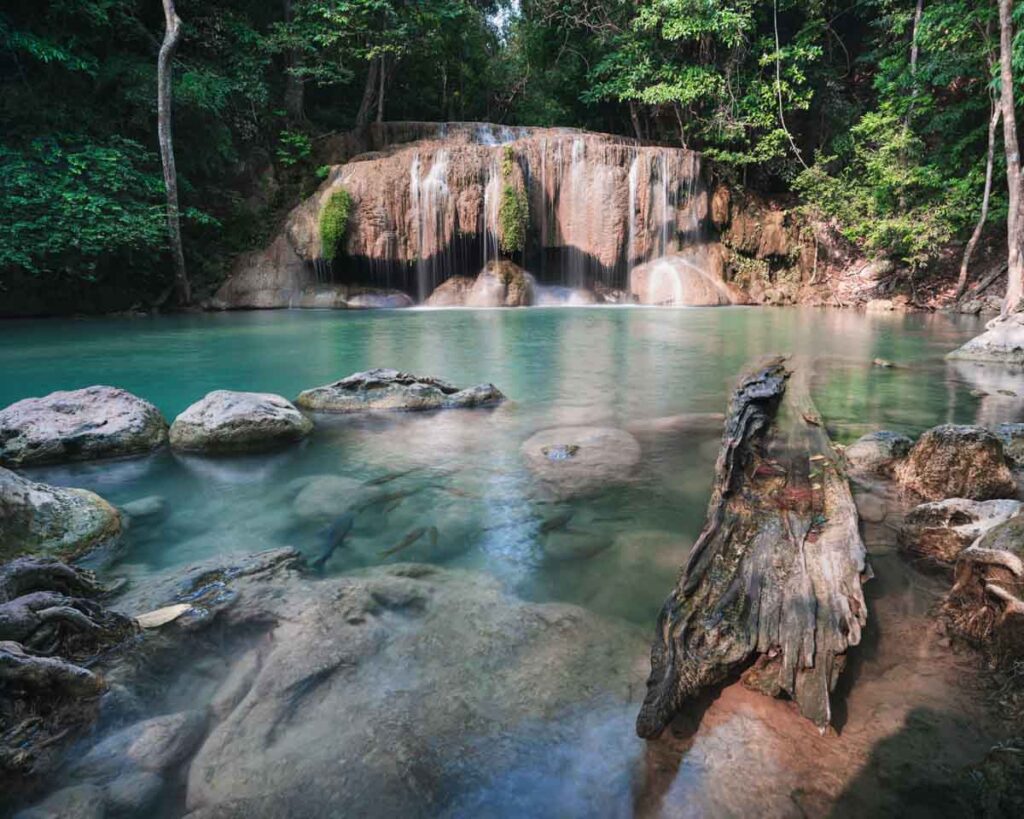
But we’re so glad we went, as it ended up being one of the best photography spots in Kanchanaburi. With a bit of planning and an early start, it’s honestly magical.
It’s not even that close to Kanchanaburi, but it is worth the drive! Especially for waterfall photography.
The waterfall is made up of seven tiers, each with its own little pool, cascade or jungle backdrop. You don’t have to hike to the top to enjoy it.
We stopped at Tier 5 and still came away with loads of shots we loved. The early morning light, reflections in the turquoise water and gentle cascades are perfect for wide-angle or slow-shutter photography (tripod essential!).

✨ Share your photos in my Travel Photography Facebook group! ✨

From a photography point of view, the best time to visit is right when the park opens at 8am.
Before 9:30, the pools are still and beautifully blue, the trails are quiet and the light is soft, which is ideal for capturing those postcard-style shots.
After that, the crowds arrive (along with dozens of bright orange life jackets), so it’s a very different vibe.
The full hike to Tier 7 is around 2km one way, getting steeper after Tier 4. We’d say it’s manageable, but if you’re carrying camera gear, you’ll want to pack light and give yourself time.
The first few tiers are the easiest and most scenic anyway, so don’t feel like you’re missing out if you don’t go all the way to the top.
☕TIP: Make sure you grab an iced coffee after in the coffee shop in the car park!

💡TIPS
👉Opening Times: 8am – 4.30pm, daily
👉Cost: 300 THB / £7 (foreigners) + 30 THB parking
👉How to get there: Erawan National Park is about 1.5 hours from Kanchanaburi town by car. We drove ourselves and it was super easy. There’s also a public bus from the main station or you can book a private tour, but if you’re serious about photography, we’d recommend the car as it gives you the freedom to arrive before the crowds.
👉Distance from the centre of Kanchanaburi: 1.5 hours by car
👉What to photograph? Waterfalls, logs and autumnal leaves, jungle backdrops to get varied compositions.
📸 Photography Tip: Don’t forget your tripod and an ND filter, both crucial for those long exposure shots
🚌 Recommended Tour – Erawan Waterfall and Train Full Day Tour
Tham Krasae Death Railway Bridge
This is an easy stop off after visiting Erawan falls in the morning and if you time it right, you’ll be there for mid to late afternoon and catch the train trundling by, which is what we did!
It’s free to explore with a huge car park and a little restaurant to get drinks and snacks.
This is a much quieter experience than its counterpart, Bridge over the River Kwai but in our opinion, so much more beautiful, especially for photography.

Surrounded by lush green landscapes and smooth flowing water of the Kwai Noi River, the train track makes for a really cool photography subject.
There’s also a cave called Tham Krasae Cave, which is tucked right beside the famous wooden railway bridge.
It was once used as a shelter by prisoners of war during construction and today you’ll find a peaceful Buddha statue inside and lots of offerings.


💡TIPS
👉Opening Times: 24 hours a day, 7 days a week
👉Cost: Free
👉How to get there: Easiest by car, we hired one for our trip and it gave us loads of flexibility. You can also try Grab, but don’t rely on getting a return pickup without pre-arranging it.
👉Distance from the centre of Kanchanaburi: 55 minutes drive
👉What to photograph? Railway tracks, the train, the surrounding landscapes
📸 Photography Tip: You can fly your drone here to get some ariel views of the tracks and surrounding landscapes which make for a dramatic capture

📸FREE Photography Guide
Want to take your photography skills to the next level?
Download our FREE photography planning guide! It’s packed with 8 simple location tips to help you capture breathtaking photos, no matter your skill level.
Simply enter your details below, and we’ll send you the guide along with additional tips and tricks to inspire your photography journey. Whether you’re a beginner or looking to refine your craft, this guide will set you up for success.
Download our FREE guide below👇
🎥 short film of Kanchanaburi Itinerary in Action
Prefer to see things in motion?
We filmed a short video during our trip to Kanchanaburi to give you a real feel for what it’s like, from peaceful temples to jungle waterfalls, all shot on my Sony Rx100.

More Things to Include in Your Kanchanaburi Itinerary
If you’ve got a bit of extra time or just fancy mixing things up, here are some great add-ons to your Kanchanaburi itinerary:
👉Thailand–Burma Railway Centre – A small but well-done museum next to the cemetery. Closes at 4:30 pm, so aim to get there earlier in the day.
👉Hellfire Pass Memorial Museum – A powerful and sobering site, about an hour from town. The walking trail through the pass is incredibly atmospheric and perfect for thoughtful, story-driven photography. One of the most popular places to visit in Kanchanaburi.
👉Sai Yok Noi Waterfall – Just 20 minutes from Hellfire Pass, this smaller waterfall is easy to reach and makes a nice bonus stop on the way back.
👉Huay Mae Khamin Waterfall – A quieter alternative to Erawan Falls with fewer people and a wild, jungle feel. Best if you’ve got a car and more time to explore.
👉River Skywalk (Kanchanaburi City) – A 150-metre glass walkway 12 metres up with views over the river and surrounding countryside. Open until the evening, entry is 60 ฿.

Where to Stay in Kanchanaburi
We stayed at Legacy River Kwai Resort, which is also where the Somboon Legacy Foundation is based and where we were volunteering and we absolutely loved it.
It’s surrounded by nature, super peaceful and the perfect spot to unwind after a busy day exploring.
There’s an on-site restaurant with veggie options, which was a big plus for us and we found it ideal for a slower pace. It’s a little outside of town, so best suited if you’ve got a hire car, but if you do, we’d highly recommend it.
If you’d prefer to stay closer to the action in Kanchanaburi town, there are a few highly rated hotels that are perfect for exploring the night market, the River Kwai bridge and local eateries.
We haven’t stayed at these ourselves, but they consistently get great reviews:👇
🛎️ Ploy Resort – Scored as Superb from recent guests with an excellent location and beautiful rooms
🛎️ SriRungRueng Place – Scored as superb for it’s hostel type accommodation with private rooms
🛎️ Have a Smooth Day – Scored as superb by guests for its location, nice onsite café and comfortable rooms.

Best Time to Visit Kanchanaburi
Kanchanaburi is one of the hottest places in Thailand and we somehow managed to time our visit for April, the hottest month of the year!
We’d been travelling through Asia and Mexico for nearly a year by then, so we were pretty used to the heat… but even for us, it was intense.
For most people, April’s likely to feel a bit much, especially if you’re planning to hike, explore temples, or carry camera gear.
Here’s a quick seasonal breakdown to help you decide when to go: 👇
☀️ November to January – This is the sweet spot. Temperatures are much more manageable, the skies are clearer and it’s the ideal time to explore the outdoors, especially if you’re into photography. The light is softer and the air feels fresher, making everything from temple visits to waterfall hikes a lot more enjoyable.
🔥 February to April – Things start heating up fast. The landscapes are still beautiful, but the heat is no joke, especially around midday. If you do visit during this time, plan early starts, bring loads of water and try to photograph in the mornings or late afternoons.
☔ May to October – Rainy season. While the countryside gets gorgeously green and the waterfalls are full and dramatic, you’ll likely be dealing with muddy trails, murky water and unpredictable downpours, which is not ideal for long exposures or drone shots. Still, it’s quieter and lush if you don’t mind the wet!

Staying Connected in Kanchanaburi: Tourist SIM Tips
Getting a local SIM card is one of the first things we always do when we arrive in Thailand and Kanchanaburi is no exception. It makes everything easier, from booking Grab rides and checking train times to finding hidden cafes or temples on Google Maps.
We personally recommend AIS, especially if you’re planning to explore beyond the town centre. Their coverage has been excellent for us across Thailand (even in more rural areas) and we’ve found them super reliable.
The easiest option? Just head to an AIS store when you arrive, the staff are used to helping travellers and will get you set up in minutes. They’ll even pop the SIM in for you and make sure everything’s working before you leave.
If you’d prefer to get everything sorted before you land, an eSIM is a great, hassle-free alternative. Just make sure your phone supports it. We’ve used eSIMs in the past when arriving late or wanting instant connection and setup was quick and smooth. Sure, it’s a little bit pricier, but so convenient.
Final Thoughts on Visiting Kanchanaburi
We’ll be honest, we only ended up in Kanchanaburi because we had a month-long volunteering role lined up, but wow, we were completely blown away.
The landscapes, the atmosphere, the people, it’s got this peaceful, grounded atmosphere that’s so different from the chaos of Bangkok or the buzz of Chiang Mai.
It’s the kind of place that makes you feel like you’re experiencing the real Thailand.
The countryside feels untouched in places, the photography opportunities are endless and yet there are far fewer tourists than you’d expect. We’re already talking about going back just to explore more of the hidden corners and rural areas we didn’t have time to see.
If you love slower travel, meaningful experiences and capturing places that still feel a bit wild and raw, Kanchanaburi should absolutely be on your Thailand itinerary.
We couldn’t recommend it more.

FAQs About Visiting Kanchanaburi
How many days do you need in Kanchanaburi?
This itinerary is built around 4 days, which we think is a great amount of time to see the highlights without rushing. But honestly? You could easily spend a week here. There’s so much natural beauty and if you love photographing landscapes, you could spend days just driving around the countryside capturing different scenes.
Can you visit Kanchanaburi as a day trip from Bangkok?
Technically, yes – the train from Bangkok to Kanchanaburi takes around 2.5 to 3 hours, depending on the service. And you can hire a private driver if you want to see just a couple of things near the centre. But we really don’t recommend doing it as a day trip. You’ll be rushed, miss the best light for photography and won’t get to enjoy the laid-back charm that makes Kanchanaburi so special. If you can, stay at least a couple of nights to really make it worthwhile.
Is Kanchanaburi safe?
We definitely felt very safe the whole time we were there. The locals were incredibly friendly, the atmosphere was relaxed and we never once felt uneasy, even when driving around more rural areas. As always, basic travel awareness applies, but overall it’s a very chilled and welcoming place.

Where to Go After Kanchanaburi?
So, once you’ve had your fill of waterfalls, temples and jungle views, the big question is – where next?
You’ve got a couple of brilliant options depending on what you fancy.
Back to Bangkok
You can totally head back to Bangkok if you’re in the mood for more city vibes. It’s a great place to squeeze in a few more interesting temples, grab some last-minute souvenirs or just wander with your camera at golden hour. There’s loads that most people miss on their first go, so it’s well worth a revisit.

Up North to Chiang Mai
This is what we did and honestly, we loved it. We jumped on the overnight sleeper train (which we weirdly loved, so comfy and kind of fun!) and made our way up to Chiang Mai.
Not only do you have Doi Inthanon National Park super close by, but Chiang Mai also makes for the perfect gateway to Northern Thailand if you’re into mountains, misty mornings and quieter temples. Some of our absolute fave photo spots are up there.

Wherever you head next, we reckon Kanchanaburi will be one of those places that sticks with you and it’s the perfect launchpad for more Thai adventures.
Would you like to connect with other photographers who share your passion?
✨ Exclusive content on finding beautiful photography locations – how to get there, the best times to visit, and what shots to capture!
✨ Tips, advice and tailored support on photography gear and techniques!
✨ Inside information on the best photo spots in specific locations to help you plan your next trip!
✨ Connecting with other Travel Photography lovers!
More Thailand Inspiration!
- Visiting Phu Chi Fa Mountains in Thailand – A Photographers Guide
- 2-Week Northern Thailand Itinerary for Photographers
- How to get from Chiang Mai to Doi Inthanon National Park
- Guide to Ang Ka Nature Trail in Doi Inthanon National Park
- Pha Dok Siew Nature Trail – Doi Inthanon National Park
- How to choose an ethical elephant sanctuary in Thailand
- Kew Mae Pan Nature Trail in Doi Inthanon National Park
- Mae Ya Waterfall in Doi Inthanon National Park – A Photographers Guide
- Mae Klang Waterfall in Doi Inthanon National Park – A Complete Guide
- Mae Salong in North Thailand – A 2-Day Itinerary
- Things to do in Doi Inthanon – A Day trip from Chiang Mai
- The Overnight Sleeper Train from Bangkok to Chiang Mai
- How to Visit Thailand’s Sky Temple in Lampang
- How to Travel from Chiang Mai to Bangkok by Day Train
- Ultimate Guide to Wat Sam Phran Dragon Temple in Bangkok
- Visitors Guide To Sirithan Waterfall in Doi Inthanon
- Wachirathan Waterfall in Doi Inthanon – A Complete Guide
- 4 Beautiful Doi Inthanon waterfalls You Shouldn’t Miss
- A Complete Guide to 3 Beautiful Doi Inthanon Hikes
- A Complete Guide to Twin Royal Pagodas at Doi Inthanon
- Chang Chill – An Ethical Elephant Sanctuary in Chiang Mai
- Is It Safe to Drive in Thailand? Everything You Need to Know
- Chiang Mai Lantern Festival: Is it Worth it? An Honest Guide
- 11 Best Places to Visit in Northern Thailand for Photography
- 4 Day Chiang Mai Itinerary for Photographers
- Guide to The Tiger Cave Temple in Kanchanaburi – Wat Tham Sua
- The Photographer’s Guide to Erawan Waterfalls, Kanchanaburi
